








On May 7, 2019, two students opened fire in a classroom at the STEM School Highlands Ranch in Colorado, leaving one person dead and eight people injured. Alex Patterson ‘28, a third grade student at the time, was in the classroom just next door.
“I didn’t go to school for a couple months afterwards because I just could not go,” Patterson said. “I refused to speak for a really long time after [the shooting] because I thought if I made any noise, I would die.”
This experience impacted Patterson’s decision to switch schools, transferring to another local school before her family moved to Villanova in 2019. She started at The Baldwin School in sixth grade.
“I thought it seemed a lot safer to come to an all-girls school,” Patterson said.
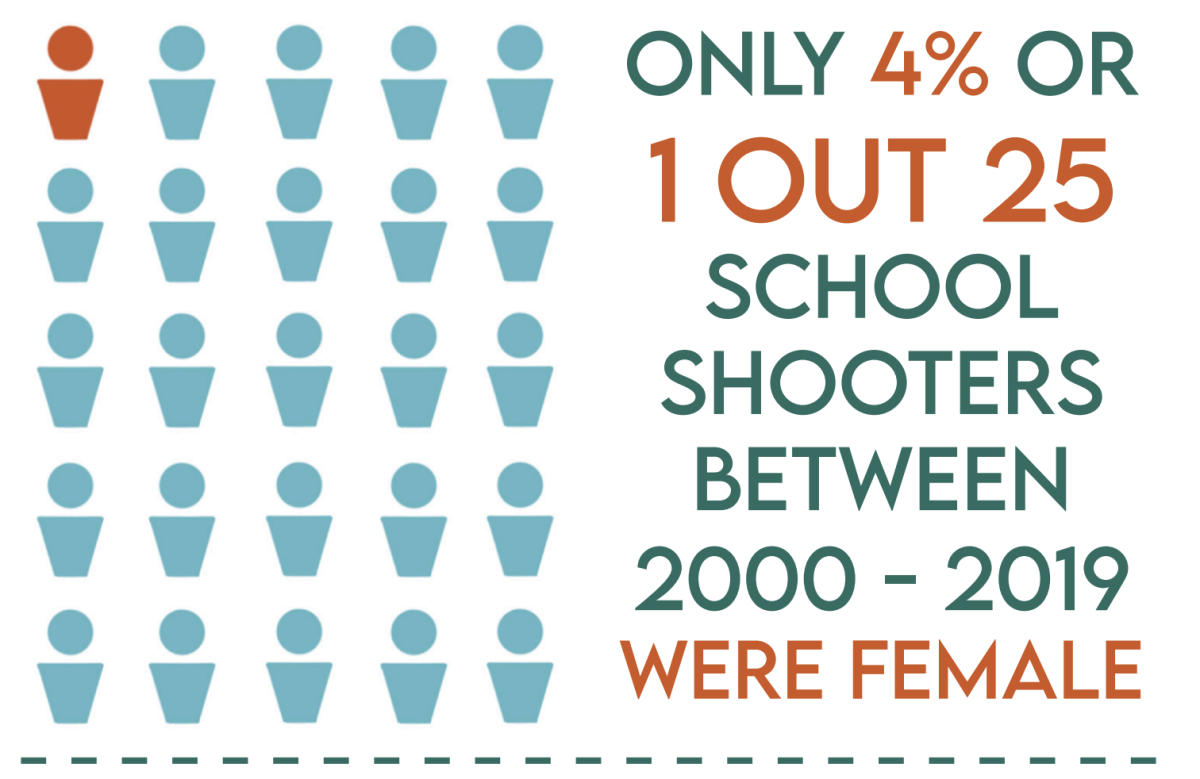
As a historically all-girls school, Baldwin is generally considered a lower-risk environment for school shootings, according to a U.S. Secret Service analysis of targeted school violence from 2000 to 2019. Only 13 of the 332 perpetrators from 2000 to 2019 were female, making up less than 4% of school shooters.
However, our community is still shaped by the broader reality of safety in schools, as evidenced by Baldwin’s strictly enforced ID requirements for entrance to campus. For students and faculty alike, this poses the question: what does it mean to be safe at school?
Mrs. Eliza Whitney, Baldwin’s graphic design teacher, has a perspective on safety that is informed by her own past experiences at school. Although Whitney attended a Quaker school, where fire drills were the furthest extent of school safety protocol, she also came of age in the shadow of the 1999 Columbine High School shooting.
“We lived in a bubble where [gun violence] would never happen,” Mrs. Whitney said. “The thought of anyone having a gun or a weapon at school was inconceivable.”
Mrs. Whitney remembers being in her first year of college when the Columbine High School shooting occurred. On April 20, 1999, two male perpetrators murdered 13 students and one teacher at Columbine High School in Columbine, Colorado. This was one of the deadliest mass shootings in the United States, and a turning point in the meaning of school safety.
“It was a huge deal,” Mrs. Whitney said. “It was the only thing in the news for weeks, and it was terrifying. I feel like it shook everyone – parents, children, people without children. It was sort of a pivotal moment, but it had a profound impact.”
After Columbine, schools across the country implemented “protect-in-place” procedures, according to a National Fire Academy research project in 2000 that investigated the impact of Columbine and school violence on emergency management.
This school year, Baldwin has continued to refine its own safety measures. Baldwin now uses Ruvna, a digital platform where teachers, administrators, and staff can mark the status of students in their care as safe or missing during emergency situations. This app creates a dashboard for administrators and first responders to see who needs help in the event of a school threat.
However, as teachers rely more on phone usage for safety reasons, students have been mandated to put away their phones for the entirety of the school day.
While Patterson agrees with the educational reasoning for why phones should be away, she does not think phones should be required to remain in a locker or in a car.
“Say something were to happen,” Patterson said. “How do you contact your parents and things like that?”
Conversely, Rachel Sommer ‘29 believes student access to phones could potentially compromise their safety in the event of an emergency.
“If there’s a school shooting and your phone just goes off, then [the shooter] will know where you are,” Sommer said.
However, Patterson thinks Baldwin’s focus should be on improving safety procedures rather than implementing rules for students. For example, Patterson mentioned that Baldwin did not have a lockdown drill last year.
“I feel like [lockdowns are] kind of a taboo subject,” Patterson said.
Patterson noted that in the event of a lockdown, she wouldn’t know what the lockdown alarm would sound like.
Some students are now taking an active role in promoting school safety.
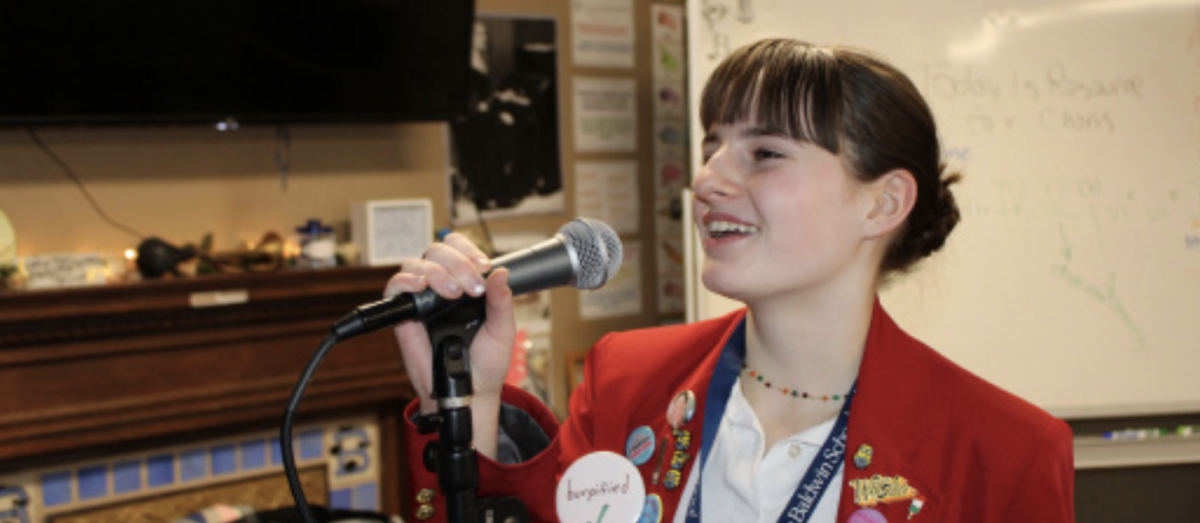
Patterson, for example, is the head of the Gun Safety Committee at Baldwin, an organization designed to educate and raise awareness about gun safety in schools.
“There should be a lot more background checks so that [guns] aren’t being given to people who’ve had felonies,” Patterson said. “There should be mental health [evaluations] and things like that.”
While current federal law does not require a mental health record check for purchasing a firearm, Pennsylvania does require this check, as well as a review of one’s criminal record. Still, Patterson notes that parents should ensure that their children cannot access guns in their homes.
Additionally, Patterson is a member of Student Voices of Pennsylvania, where they prepare ideas for senators, and advocate for gun reform. Patterson often sends letters to senators and attends protests.
“We need to fix this,” Patterson said. “This can’t keep happening. I mean, it’s been six years since my experience and literally nothing has changed. It’s been 26 years since Columbine, and nothing has changed at all.”