












It’s already hard enough to balance academics, sports, arts, and friends — but what happens when a part-time job is added into the mix? Most students are on campus for more than 9 hours every day, and spend hours more doing homework once they’re home.
Often, Baldwin students spread themselves thin with weekends full of extracurriculars and social events. This raises the question: how do students have the time to commit to a part-time job?
At a school where it’s demanding to balance endless commitments, taking on a job adds another layer of responsibility. For many Baldwin students, working is not just about earning money. Rather, it’s about gaining independence, time management skills, and real-world experience beyond the classroom.
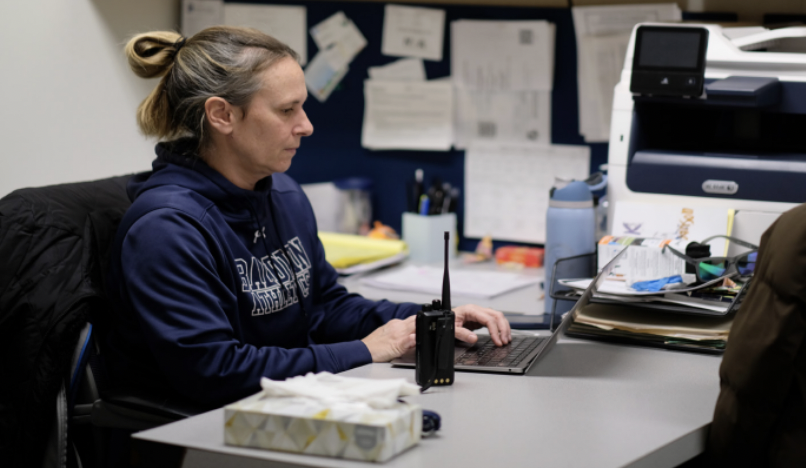
Nora Ruse ’28 explains that adding a part-time job to her schedule has helped her develop careful planning and discipline. Ruse works as a hostess at local restaurant Gullifty’s, which she balances with homework, lacrosse, and spending time with friends.
“I’ve learned the art of doing my homework…when I’m given the time and really using my free periods and G-blocks,” Ruse said. “[It’s] so much easier when I don’t have to worry about having to finish my homework [after work].”
Through part-time jobs, students also gain financial and practical lessons.
Deena Fechner ‘29 works as an assistant coach for the after-school squash clinics and summer camps at Baldwin. She described the freedom that comes from earning her own money.
“I’m not as reliant on my mom…and I can just buy things if I do,” Fechner said. “Also, you will run out [of money], you have to be smart with what you’re buying.”
She also highlighted the skills that working as an assistant coach has refined for her.
“You really have to learn every different kid…what they’re like, what they like, [and] what they don’t like,” Fechner said.
Zoey Shaubel ‘29 also works with children, serving as a babysitter for families around her neighborhood. She believes her experiences babysitting have made her more comfortable working around kids and taught her social skills through speaking to parents.
She reinforced the idea that working refines students’ leadership and financial skills.
“I definitely learned to negotiate money better,” Shaubel said.
Other students choose a path similar to a part-time job by regularly volunteering and doing community service. Sofia Tang ‘28 works with Music Angels, an organization that provides service through music.
She described her job from a slightly different angle, focusing on the social aspect of working.
“You can make a lot of friends through service and part-time jobs…you meet a lot of new people and you build connections,” Tang said.
Ultimately, despite the additional challenges a part-time job brings, most students still recommend it.
According to Tang, “It’s really rewarding, in the most unexpected ways.”