













Whether it’s making flashcards or watching video lectures, students at The Baldwin School all have their preferred tricks for preparing for assessments. But what makes each student’s study habits so unique?
New Zealand educationalist Neil Fleming first identified four main types of learning through his work on the VARK model in 1992. These letters stand for the learning types: visual, auditory, kinesthetic, and reading/writing. Each style has distinct features that cater to the different needs of every student, which is reflected at Baldwin.
To better understand how these learning styles were reflected at Baldwin, a survey was conducted amongst eighty-four Upper School students to determine their best learning styles and preferred studying methods. Of these students, 38% considered themselves visual learners who understand material best through images, diagrams, and infographics.
“It’s helpful when teachers provide visual aids along with their lectures, like when Dr. Biss used political cartoons to help us better understand his lecture about the Spanish-American War,” Dani Loveman ‘27 said.
Some students identify with more than one learning type. Anna Marie Min ’29 considers herself both a visual and kinesthetic learner.
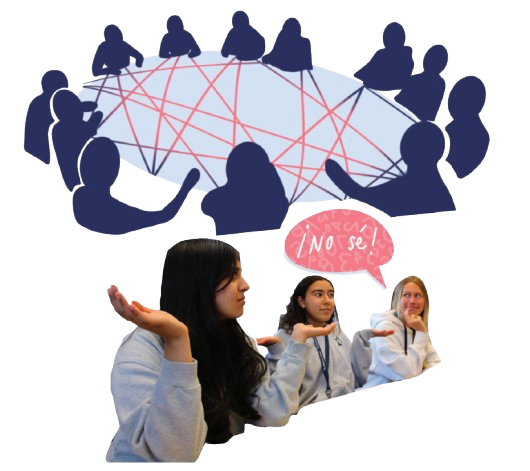
“I like it when the teachers interact with the students rather than making it just a lecture,” Min said. “Hearing other people’s ideas also helps me come up with my own ideas, or see if my own ideas match with someone else’s.”
Even so, 30% of Baldwin students prefer traditional teacher-led lectures. These preferences often reflect the demands of different subjects: math and science courses require problem-solving tests and hands-on practice, while history and English classes are often essay-based.
Essay-writing is an example of the reading and writing learning style. These learners make up 23% of Baldwin students surveyed. For reading and writing learners, writing helps trigger their brains to memorize and connect their writing back to the concept they are learning.
The range of learning styles at Baldwin may also reflect teaching styles.
“History and English click with me more, mainly because of the teachers and their teaching style,” Min said.
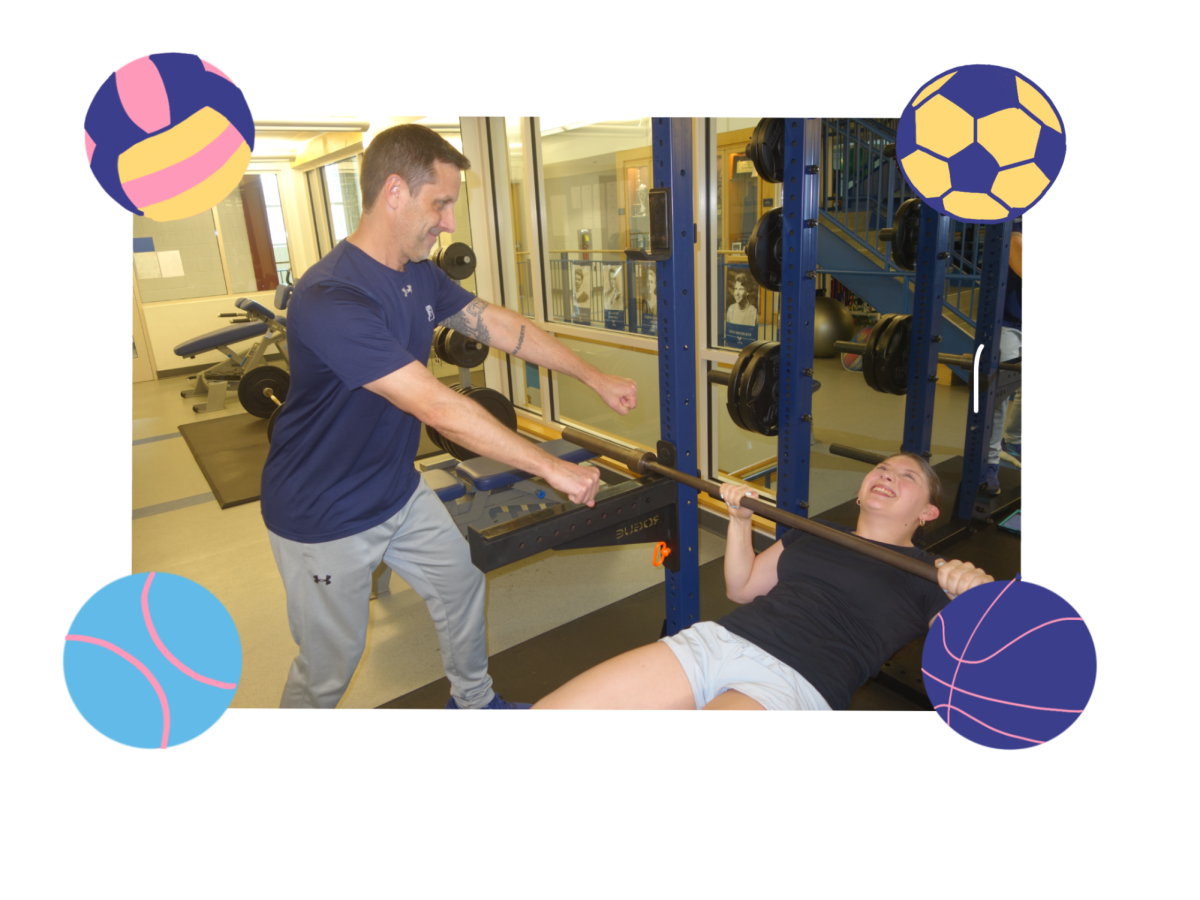
Cydnei Crisden ‘27, who is also a kinesthetic learner, enjoys hands-on work in classes.
“The more different classes I took, I realized that I did better in simulations because I understood them more thoroughly,” Crisden said.
Other students’ learning styles are reflected in the way they study and retain information.
“I like to learn through interactive lessons, and I like teaching topics I need to remember to others,” Claire Northington ‘29, a kinesthetic learner, said.
While Northington may study by teaching topics to friends, the most successful study strategies at Baldwin are visual-based. Crisden, although a kinesthetic learner, shares how visual methods help her prepare for classes.
“I get these big whiteboards for when I study so that I can practice jotting down conjugations and formulas for different classes,” Crisden said. “It really helps me see everything on one big page.”
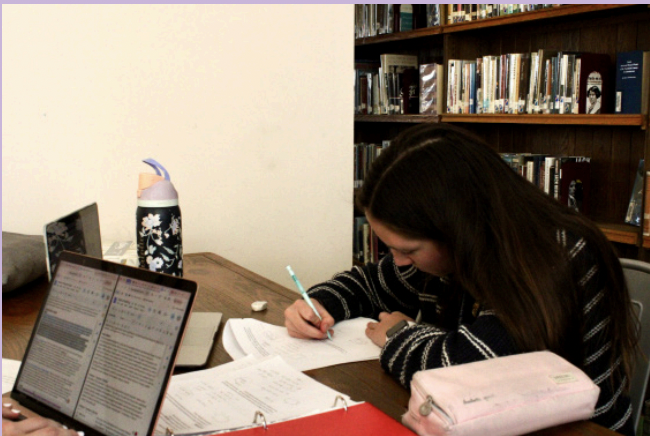
At Baldwin, the most successful study method for students was making a study guide, which made up 80% of participants. The next most popular study strategy was using flashcards, which comprised 67% of Baldwin students. On top of using traditional index cards, many Baldwin students shared that they use Quizlet to make flashcards, share study sets with others, and even play memorization games.
For classes such as languages and science, many students described that rewriting concepts, definitions, and vocabulary helped them memorize topics thoroughly.
Others at Baldwin prefer an auditory study approach. Auditory learners understand material best through music or songs, audio versions of lectures, or podcasts. Auditory learners made up the minority of learners at Baldwin, comprising approximately 10% of the surveyed students.
Sarah Tarka ‘28 uses a unique auditory strategy when preparing for topics in her classes.
“In chemistry class, I memorized songs on the polyatomic ions and elements on the periodic table,” Tarka said. “Honestly, you could just look up certain topics on YouTube, and then add ‘song’ to the end of it, and something will probably come up.”
Despite auditory learners being the least common type of learner among Baldwin students, there is one key study tool that many may overlook as a true method: background music.
According to the National Library of Public Medicine, students who use background music have better comprehension and memory retention than those without.
“[Studying with music] is relaxing, and it helps me focus,” Piper Skoglund ‘26 said. “The music I listen to changes depending on the subject. Since English and history have a lot of words, I don’t listen to music with words, since I might write down lyrics instead. But when I’m working with numbers, I listen to pop.”
In the end, there is no “right” way to learn or study. Every student learns and studies differently, and understanding our preferences helps us be efficient and retain new information better. So, from using Quizlets to teaching your friends, what style do you prefer best?