












In the wake of the recent TikTok ban, many teenagers have realized how dependent they are on social media. This sheds light on a larger issue: the endless string of apps keeping students on their phones, whether it’s Instagram, Snapchat, Pinterest, or Netflix, the list goes on.
According to ABC News, teenagers spend an average of up to seven hours on their phones each day. Even just an hour or two of screen time daily can quickly add up over the week.
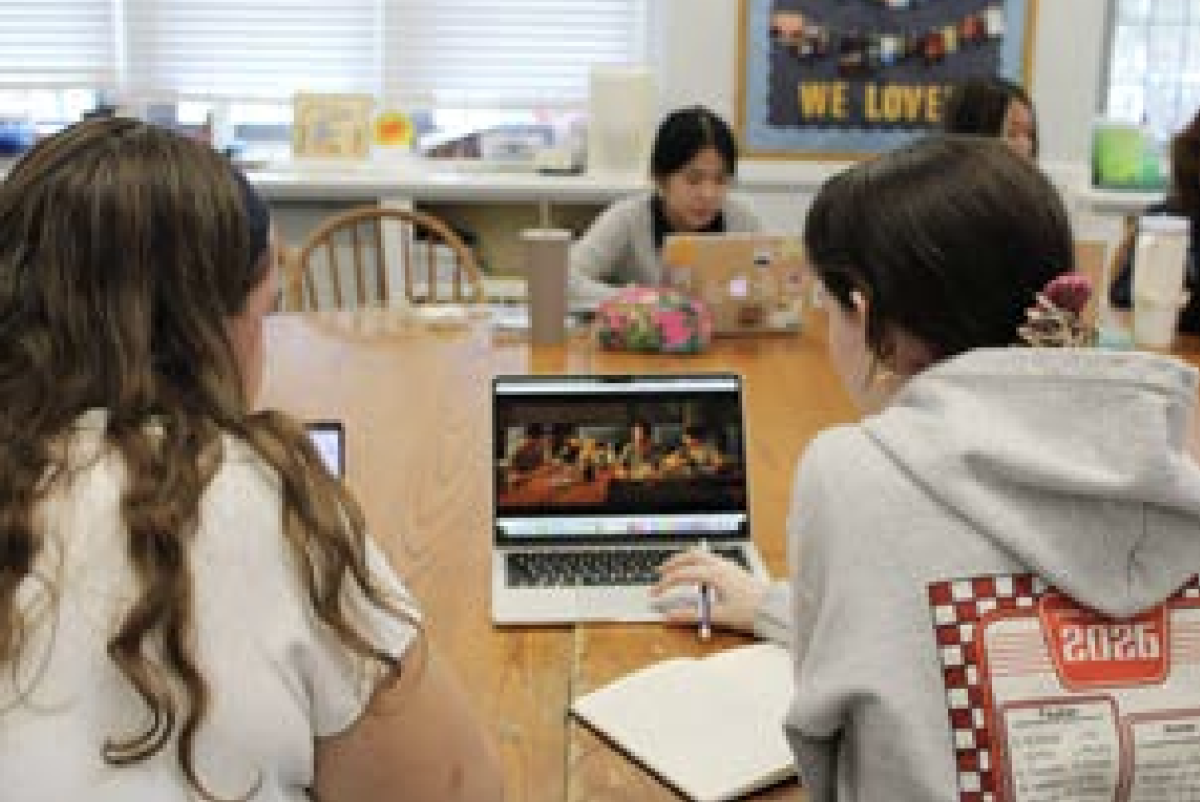
Based on data collected from 68 Baldwin freshmen and juniors, students have an average phone screen time of three to four hours per day. Their most used apps are social media-related, specifically TikTok and Instagram.
However, these longer screen times can interfere with students’ already busy schedules, potentially disrupting their academic responsibilities and sleep.
“It can be pretty distracting,” Clara Chen ‘27 said.“That cuts into time to study for tests and classes.”
“Sometimes I can stay up later because of it, which can make me feel less prepared for the next day,” Ariel Luo ‘28 said.
Especially at an institution like Baldwin, driven students are already juggling homework, extracurriculars, and social lives.
Ambea Nmah ‘26, Baldwin Dance Team Co-Captain and Mean Girls choreographer doesn’t get home from school and practices until 8:30 p.m. every night.
“By the time I’m home, I’m exhausted and ready to sleep,” Nmah said. “But then I go on my phone and scroll on TikTok. When I finally look at the time, I realize, ‘I could have used this time to do my homework!’”
As a result of this, Nmah often has homework left to do at school in the morning and during her free periods. She believes that by cutting down on phone time, she could relieve a lot of the stress that she puts on herself.
Amelia Dennis ‘25 also manages a busy schedule: being a class officer, participating in clubs, and performing as Cady Heron in the Mean Girls play. She points out that the engaging nature of social media makes it hard to simply close out of apps.
“It’s really easy to get stuck in a rabbit hole,” Dennis said. “Also, I feel like I’m pretty passive on the app; I’m not posting or making content.”
Students’ busy schedules make the little free time that they have an even more important time to destress. In a study done by the International Association of Applied Psychology, researchers found that free time improved participants’ mental health when spent productively. Instead of “doom scrolling,” students could be taking time out of their day to pursue their hobbies and recreational activities.
“If I didn’t use my phone, I would have time to be bored and find myself things to do,” Laila Gopalani ‘26 said. She would use this time to read books, cook food, and spend more time with family and friends.
Putting the phone down, however, is easier said than done. Here at Baldwin, students have found their own ways to decrease screen time.
“I have a screen time limit on my phone for Instagram that I set myself — it’s 20 minutes a day,” Gopalani said. “Also, I try to put my phone in a different room when I’m doing my homework so that I’m not checking it in between problems.”
Similarly, Damia Je ‘27 makes sure her phone is off and away when doing homework.
“Sometimes I set TikTok as a ‘goal’ that I can only look at after I’ve done everything,” Je said.
Ultimately, Baldwin students are always learning and working towards a more healthy and balanced screen time usage.
Nmah said it best: “As much as I want to have that time to spend on my phone, I also have to prioritize my schoolwork and activities.”