




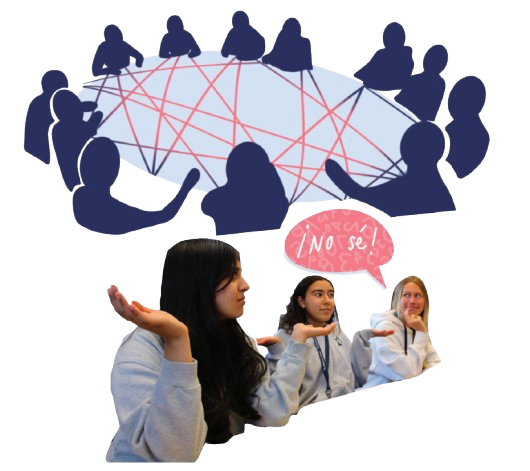









Do teachers have favorites? High school can often feel stressful, and when things don’t go according to plan, students begin to question everything – including whether they are treated equitably.
“[Favoritism] can be very clear,” Cydnei Crisden ‘27 said. “You can tell because the teacher acts differently and lets more things slide.”
Students see this type of favoritism in the classroom manifest in different ways that they sometimes perceive as unfair bias.
“I feel like sometimes teachers listen better to certain students and are more lenient when it comes to making exceptions,” Dani Loveman ‘27 said.
Moreover, some students bond with certain teachers over shared interests, whether through going to school sports events or talking in the teacher’s classroom.
“[Some teachers] understand me more and are easier to talk to, and I have formed a relationship with them,” Fatinah Muhammad ‘28 said.
But do shared interests with students impact classroom interactions?
“There are students that I connect with better, but that doesn’t mean I like them more,” Ms. Mercedes Reichner said. “I think that every teacher believes in the full potential of all students.”
This leads to another topic of conversation among students: are teachers able to see their students’ full potential if teachers only see the academic side of the student in the classroom? For example, students may fear that being quiet during class can impact how teachers evaluate their capabilities.
Mr. Mark Reinman addressed this concern by explaining how teachers balance their evaluation of students equally.
“I recognize that it is easier for some students [to participate] and harder for others,” Mr. Reinman said.
“Sometimes students are quiet, but we have multiple methods of expressing their ideas. The English department does not let one area affect the rest of the areas.”
Mr. Reinman noted that, if students are quiet and do not engage often during class, teachers offer resources for students to engage with them academically outside of class hours.
“I value meeting with people individually so you can personalize your feedback,” Mr. Reinman said.
However, another difficulty for students is if they perceive that some of their peers receive more attention from teachers during class. For teachers, though, this is a necessary step to maintain fairness for all students.
“The students who struggle the most are the ones who need the most help,” Mrs. Mary Brennan said.
Mrs. Brennan made it clear that providing additional help does not prevent her from grading objectively.
“I am doing an injustice to [students] if I give them an ‘A’ when they have not earned it,” Mrs. Brennan said. “I am objective.”
She believes inflated grades are unfair, because they prevent students from meeting their full potential.
Some teachers are also willing to give exceptions based on extenuating circumstances, and these exceptions can sometimes come across to other students as unfair.
Mr. Hermans explained that teachers go about treating students depending on the circumstances of a given situation. Each student, he noted, comes from a different background and lives a unique life, so identical treatment isn’t always possible.
Nonetheless, Mr. Hermans believes that fairness has nuance.
“Fair does not always mean equal,” Mr. Hermans said.
Mr. Hermans also disagreed with the idea that students do well because teachers like them, stating simply that if a student’s work is good, they will get a good grade.
Ultimately, what students perceive as favoritism may simply reflect teachers’ efforts to balance fairness, empathy, and academic standards. As Mr. Reinman explained, showing favoritism offers no real benefit to teachers.
“To dislike someone as a teacher takes an awful lot of energy,” Mr. Reinman said.